Recap
REC.From Idea to Launch: Where’s the Real Dividing Line for AI Products?
February 28, 2026 @ 2:00 pm - 6:00 pm
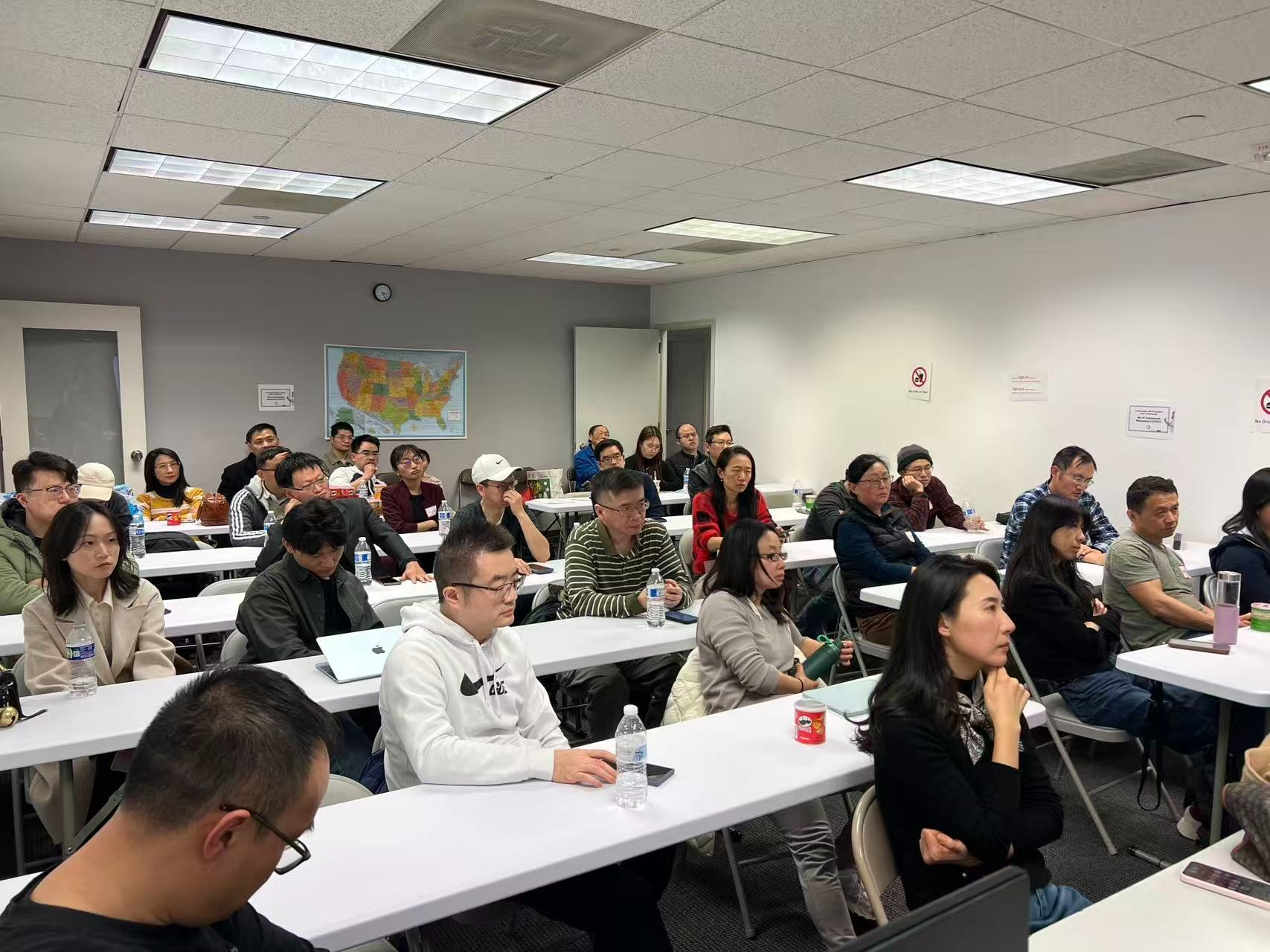
CADSEA hosted an in-person event at a North American university — "AI from Idea to App Store: A Practical Walkthrough."
We were joined by CADSEA co-founder Richard Xie, who drew on his hands-on experience building and shipping his AI product V-Rise to break down — across product, engineering, and education — how an AI idea actually makes its way to real users.
This wasn't just a talk about "AI technology." It was a deeper conversation about how to build real capability in the AI era.
From "Can Be Done" to "Got It Done": The Real Path of an AI Product
Richard opened by naming something many people overlook: the barrier to AI is dropping, but the real dividing line was never whether you can — it's whether you actually shipped it.
Using V-Rise as the example, he walked through the full journey from initial idea to feature design, engineering implementation, and finally the App Store launch — including automated video analysis and content organization, trade-offs in storage and cloud architecture, and repeated iteration between product features and user value.
The takeaway: the core of an AI product isn't just model capability — it's the complete ability to productize.
Learning Is Being Rewritten: From Acquiring Knowledge to Building Structure
On AI's impact on education, Richard highlighted a key shift: future competition won't be about what you know, but how you organize and use knowledge.
He shared how AI raises learning efficiency — building personalized knowledge structures, enabling tiered learning (middle / high / AP), and embedding AI into the daily learning workflow rather than treating it as just a tool. This sparked plenty of discussion: traditional learning paths are being restructured, and actively designing how you learn is itself becoming a core skill.
Capability Reconstruction in the AI Era: Judgment Over Knowledge
In the career segment, the discussion went deeper. As multi-model collaboration (generation, verification, reasoning) becomes the norm, AI can generate content and assist with verification — but the responsibility for real decisions still rests with people.
The skills that matter most going forward: judgment, problem framing, and product insight (user pain points & market understanding). As Richard put it:
"More important than the answer is the question you're asking."
In other words, learning itself needs an upgrade — from memorizing facts to understanding why / how / context.
From Engineering to Product: AI Isn't Just a Technical Problem
Many attendees noted a very real shift in their notes: AI projects are no longer just modeling — they're business problems.
Richard shared several key reflections: how to judge whether an AI product is genuinely relevant, how to balance user growth against cost, and how to improve system reliability through workflow design. He also noted that multi-model collaboration (OpenAI, Claude, Gemini, etc.) is becoming a common architecture, the open-source ecosystem keeps growing in importance, and engineering and product skills are converging fast.
The clear picture: an AI project's success is fundamentally the joint result of product, engineering, and business.
Educational Equity and AI: Opportunity and Challenge Side by Side
Richard closed on a bigger but equally important theme — educational equity.
On one hand, AI lowers the barrier to knowledge and resources: personalized mentoring, auto-generated learning content, more efficient learning-path design. On the other, it raises new questions: Can it truly cultivate independent judgment? Could it widen the gap in who can effectively use these resources?
This reframed AI for the room — not just a tool, but a capability that has to be used well.
Q&A: Questions Worth More Than Answers
The Q&A was lively, centered on a few core directions: how to control cost while driving user growth in AI products; whether companies must use open-source models; how to define "business value" in an AI project; and whether learning AI still requires solid fundamentals.
As one attendee put it:
"I used to think AI was a technical problem. Today I realized it's actually a problem of how you think."
An Update on How We Do Things
What this talk offered wasn't just an understanding of the AI product development process, but a shift in mindset: from learning tech to building products, from finding answers to asking questions, from tool user to system designer.
That's exactly the direction CADSEA has always pushed toward — helping more people not just understand technology trends, but turn ideas into results in the real world.
Missed this one? Keep following CADSEA. We're lining up more sessions on AI, career growth, and practical execution — and we hope to see you in person.